
Baby Essentials Checklist: What Your Newborn Really Needs
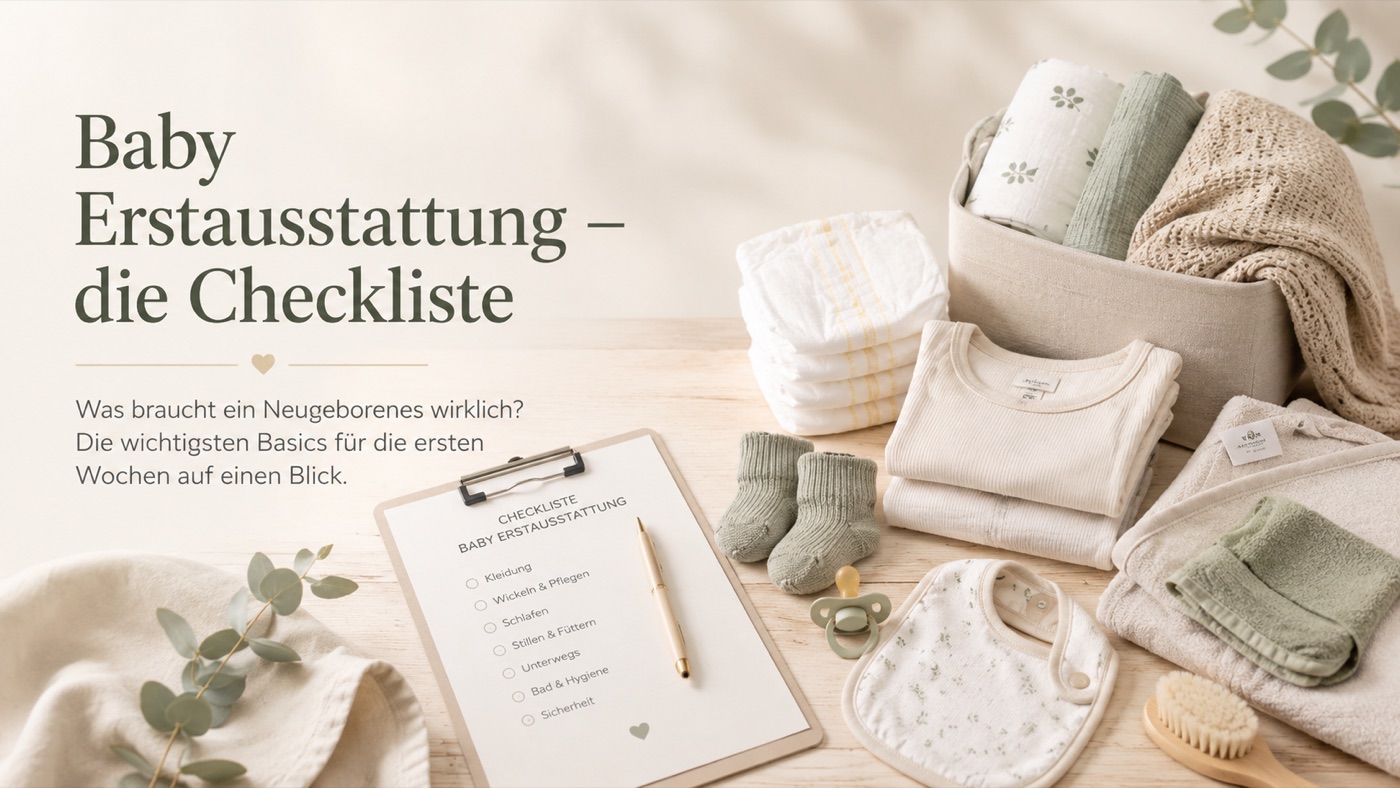
Your baby's arrival is getting closer and you're wondering what you really need? The baby essentials list covers everything your newborn requires in the first weeks and months – from the very first nappy and the right clothing through to a safe place to sleep. This comprehensive guide walks you through the complete checklist section by section, suggests specific quantities and practical tips, and shows you at the end how exactly these basics can be given as a loving gift. At MomsStory we have been making handmade diaper cakes in Germany since 2014 – a gift that brings together many of these baby essentials in a decorative way.
What are baby essentials – and when should you start putting them together?
Baby essentials are the basic set of clothing, care products, furniture and accessories that a newborn needs from day one. The goal is for you to arrive home relaxed after the birth with everything important within easy reach – without having to rush out shopping during those first, often hectic weeks.
The question "what does a newborn need" can be broadly divided into six areas: nappy changing, clothing, sleeping, feeding, care and being out and about. If you work through these areas systematically, you won't forget anything important – and at the same time you won't buy too much.
When should you begin? It's a good idea to start putting your baby essentials together from around week 28 to 34 of your pregnancy. That way you'll have plenty of time to compare options at your leisure, and you'll also be prepared for an earlier birth. Your hospital bag should be packed and ready by week 36 at the latest.
The complete checklist – section by section
The following baby essentials checklist is deliberately very thorough. Not every family needs every item – see the lists as a guide and cross out anything that doesn't fit your situation.
Nappy changing & nappies
The changing area is the heart of everyday baby life. In the first few weeks you'll be changing nappies very frequently, so a well thought-out basic set-up really pays off.
- Nappies size 1 (Newborn): 1–2 packs to start with. Many babies quickly grow out of this size, so don't stock up.
- Nappies size 2: keep 1 pack ready for the period after the first few weeks.
- Wipes: 2–3 packs, or alternatively washcloths and warm water for the first few days.
- Changing mat: 1 wipe-clean mat, ideally with a raised edge.
- Changing table or changing unit: 1, or alternatively a safe surface at a comfortable height.
- Changing bag: 1 for when you're out and about, with room for nappies, wipes and a change of clothes.
- Nappy rash cream: 1 tube to soothe a sore bottom.
- Muslin cloths: 8–10 – versatile as a burp cloth, mat or light blanket.
- Nappy bin or bags: 1 for low-odour disposal.
Tip on sizes: Newborns usually start with size 1, while very small babies start with size 0/Newborn. Pay less attention to the exact age and more to your baby's weight, which is shown on the packaging.
Clothing (size 56 / 62)
Baby clothing should be comfortable, easy to put on and take off, and made from skin-friendly materials. For newborns, sizes 56 and 62 are the most important – size 50 often only fits for a very short time.
- Short-sleeved and long-sleeved bodysuits: 6–8 in size 56/62, ideally with poppers or a wrap-over fastening.
- Sleepsuits or all-in-ones: 4–6.
- Tops/shirts: 3–4.
- Trousers or leggings: 3–4.
- Cardigans or knitted jackets: 2 to slip on quickly.
- Socks: 4–6 pairs.
- Hats: 2, suited to the season (thin or warm).
- Pyjamas: 3–4.
- Scratch mittens: 1–2 pairs, to stop your baby scratching.
Material tip: Choose soft, breathable natural materials such as cotton. Wash new clothing before it's worn for the first time. Opt for bodysuits and tops with a wide neck opening or shoulder poppers – this makes dressing and undressing much easier.
Sleeping
A safe and peaceful place to sleep is equally important for baby and parents. When it comes to sleep, less is more – especially inside the cot itself.
- Cot, bedside crib or Moses basket: 1.
- Mattress: 1 firm, well-fitting mattress with no gaps to the edge of the cot.
- Sleeping bags: 2 in the right size, instead of loose blankets.
- Fitted sheets: 2–3 for changing.
- Mattress protectors: 1–2 waterproof covers.
- Baby monitor: 1, depending on your home.
Safe sleep: Place your baby on their back to sleep. Avoid pillows, thick blankets, cot bumpers and cuddly toys in the cot. A sleeping bag keeps your baby warm without slipping over their face. Keep the room temperature pleasantly cool (around 16–18 °C) and avoid overheating.
Feeding – breastfeeding or bottle
Whether you breastfeed or bottle-feed, both approaches need a little equipment. You can add a lot of it after the birth, depending on how feeding develops.
If you'd like to breastfeed:
- Nursing bras: 2–3.
- Breast pads: 1 pack (washable or disposable).
- Nursing pillow: 1 for a relaxed position.
- Breast care: 1 tube/balm for sore nipples.
- Burp cloths/muslins: several within easy reach.
If you bottle-feed:
- Baby bottles: 4–6 in the right size.
- Teats: several, suited to your baby's age and feeding habits.
- Bottle brush: 1.
- Steriliser or large pan: 1 option for boiling/sterilising.
- Bottle warmer: 1 (optional, but handy).
Tip: Even if you plan to breastfeed, it can be reassuring to have one or two bottles in the house. Bibs (4–6) are useful either way.
Care & health
For daily care and minor ailments you only need a few well-chosen products. For anything to do with health, your midwife or paediatrician is the best point of contact.
- Baby bath or bath bucket: 1.
- Bath thermometer: 1 for the right water temperature.
- Soft towels/hooded towel: 2–3.
- Washcloths: 4–6.
- Gentle baby care: wash lotion and cream in small amounts.
- Soft baby brush: 1.
- Baby nail scissors or file: 1 with a rounded tip.
A small first-aid kit:
- Thermometer: 1.
- Nasal aspirator: 1.
- Saline solution/nasal drops for babies: for a blocked nose.
- Nappy rash cream: 1 tube.
- Antiseptic and sterile compresses: for cord care, as advised by your midwife.
- Plasters and small dressings: for later on.
Important: Don't give your baby any medication without consulting a doctor. Ask your midwife to show you how to care for your baby and the umbilical cord.
Out and about
For outings, doctor's appointments and the first journey home from hospital, you'll need safe and practical companions. The car seat is non-negotiable here.
- Infant car seat (Group 0+): 1 – essential for the journey home. Make sure you have an approved, suitable seat and that it's fitted correctly.
- Pram/pushchair: 1, ideally with a lie-flat carrycot for newborns.
- Baby sling or carrier: 1 for closeness and free hands.
- Changing bag: 1 (see the nappy changing section).
- Sun or rain cover: to fit your pram.
- Footmuff or light blanket: 1, depending on the season.
Tip: Practise fitting the car seat and putting on the sling calmly before the birth. When the moment comes, everything will go far more smoothly.
The hospital bag – what to take to the birth
Your hospital bag should be packed in good time and kept ready in a set place. Pack separately for yourself and your baby, so that everything is quickly to hand at the hospital.
For mum:
- Maternity notes, ID and health insurance card
- Comfortable nighties or nursing nightwear, 2–3
- Dressing gown and warm socks
- Slippers or non-slip socks
- Underwear, several changes
- Nursing bras and breast pads
- Washing and care items, hairbrush, lip balm
- Something to wear for the journey home
- Phone with charger and a small snack
For baby:
- Bodysuits and sleepsuits in size 56, 2–3 sets
- Hat, socks and a cardigan
- A going-home outfit suited to the season
- A warm blanket or footmuff
- The fitted car seat in the car
Tip: Ask your maternity hospital in advance what is provided on site – nappies and some care products for the first few days are often already available.
Baby essentials by season
Whether your baby is born in summer or winter mainly affects the clothing and protection when you're out and about. The basic kit stays the same – you just adjust individual items.
Summer baby
- Light, airy bodysuits and thin cotton clothing
- A thin summer hat for sun protection
- A sun cover for the pram and a shady spot – avoid direct sun
- A light summer sleeping bag
- More thin muslin cloths for protection and covering
Winter baby
- Warmer long-sleeved bodysuits and knitted cardigans
- A warm hat that covers the ears
- A thick footmuff for the pram
- A warmer sleeping bag with a higher tog rating
- In the sling, your own body warmth is often enough – don't wrap up too thickly
Tip: Layering several thin layers works well in every season. That way you can react quickly to changing temperatures.
What you don't really need – and money-saving tips
Many products are marketed as indispensable, but they aren't. Focus on the basics – you can always add more when a genuine need arises.
- Buy when needed: heat lamps, baby bouncers, play arches, hot-water-bottle alternatives and expensive designer clothing are rarely essential at the start.
- Don't stock up: nappies in small sizes and clothing in size 50 – babies grow fast.
- Buy second-hand: prams, cots, changing units and baby baths are easy to find used.
- Borrow: some items, such as baby scales, can be borrowed rather than bought.
- Buy new for safety: with the car seat and the mattress, pay attention to condition and, when in doubt, opt for new.
Set your priorities: The essentials are a safe place to sleep, a car seat for the journey home, enough nappies, basic clothing and something for feeding. Everything else can be added gradually.
Quantities at a glance
This compact list sums up roughly how much of the most important things you should keep ready:
- Bodysuits (size 56/62): 6–8
- Sleepsuits/all-in-ones: 4–6
- Pyjamas: 3–4
- Socks: 4–6 pairs
- Hats: 2
- Muslin cloths: 8–10
- Sleeping bags: 2
- Fitted sheets: 2–3
- Nappies size 1: 1–2 packs to start
- Wipes: 2–3 packs
- Towels: 2–3
- Washcloths: 4–6
- Bibs: 4–6
How many nappies does a newborn need?
One of the most common questions for parents-to-be is how many nappies are actually used. The need is highest in the first few weeks and slowly decreases over the months.
- Per day: In the first weeks you'll change nappies frequently – often around 8 to 12 a day, as newborns become wet and soiled very regularly.
- Per week: That works out at roughly 60 to 80 nappies a week in the early days.
- In the first month: Reckon on several hundred nappies as a rough estimate – a good reason to build up a small but not overly large supply.
Since every baby is different and grows into the next size quickly, you shouldn't buy too many nappies in a small size in advance. Start with size 1, keep a pack of size 2 ready and then buy more as needed.
Giving baby essentials as a gift: the diaper cake
If you're not becoming a parent yourself but would like to give a gift to new parents, you face a lovely question: how do you give something that's genuinely needed – and still looks festive? This is exactly where the diaper cake comes in.
A handmade diaper cake brings together precisely the basics from this checklist: at its heart it's made of real nappies and is decorated with useful baby items – exactly the things that belong to baby essentials. So you give something practical and decorative at the same time. At MomsStory we have made every diaper cake by hand in Germany since 2014.
Our diaper cakes are ideal as a gift for a new baby, for a christening or for a baby shower. On request, we'll design your cake as a personalised baby gift – for example with the baby's name. That turns a practical gesture into a unique, personal gift.
To suit the occasion and the family, you'll find different options:
- Diaper cakes for boys – in matching colours and designs
- Diaper cakes for girls – lovingly co-ordinated
- Neutral diaper cakes – ideal when the gender is still a surprise
We ship to Germany, Austria, Switzerland and across Europe. Delivery usually takes 5 to 7 working days, and for urgent occasions express delivery is also possible. That way your gift arrives right on time for the big day.
Give a piece of baby essentials that delights: Discover our handmade diaper cakes now and create a personalised gift that new parents can really put to use.
Frequently asked questions
When should I start putting together my baby essentials?
Ideally you begin around week 28 to 34 of your pregnancy. That gives you enough time to compare and means you're prepared for an earlier birth too. Your hospital bag should be packed and ready by week 36.
What clothing size does a newborn need?
For most newborns, sizes 56 and 62 are the most important. Size 50 often only fits for a very short time. So buy just a few pieces in size 50 and focus on 56/62.
How many nappies does a newborn need per day?
In the first few weeks it's often around 8 to 12 nappies a day, so roughly 60 to 80 a week. Usage is highest at the start and decreases over time.
What absolutely has to go in the hospital bag?
For mum, things such as maternity notes, ID, comfortable nightwear and care items. For baby, bodysuits and sleepsuits in size 56, a hat, socks and a going-home outfit. The car seat should already be fitted in the car.
What does a newborn really need – and what can I do without?
The essentials are a safe place to sleep, a car seat, enough nappies, basic clothing and something for feeding. You can do without a lot of accessories at first and buy them when a genuine need arises.
Can I buy parts of the baby essentials second-hand?
Yes. Prams, cots and changing units are easy to find used. With the car seat and mattress, you should pay attention to condition for safety reasons and, when in doubt, opt for new.
Is a diaper cake a good baby essentials gift?
Very much so. A handmade diaper cake is made of real nappies and useful baby items – exactly the basics of baby essentials – and looks festive at the same time. On request, we personalise it with the baby's name.
How long does delivery of a MomsStory diaper cake take?
Delivery usually takes 5 to 7 working days. We ship to Germany, Austria, Switzerland and across Europe. For urgent occasions, express delivery is also possible.
Leave Your Comment